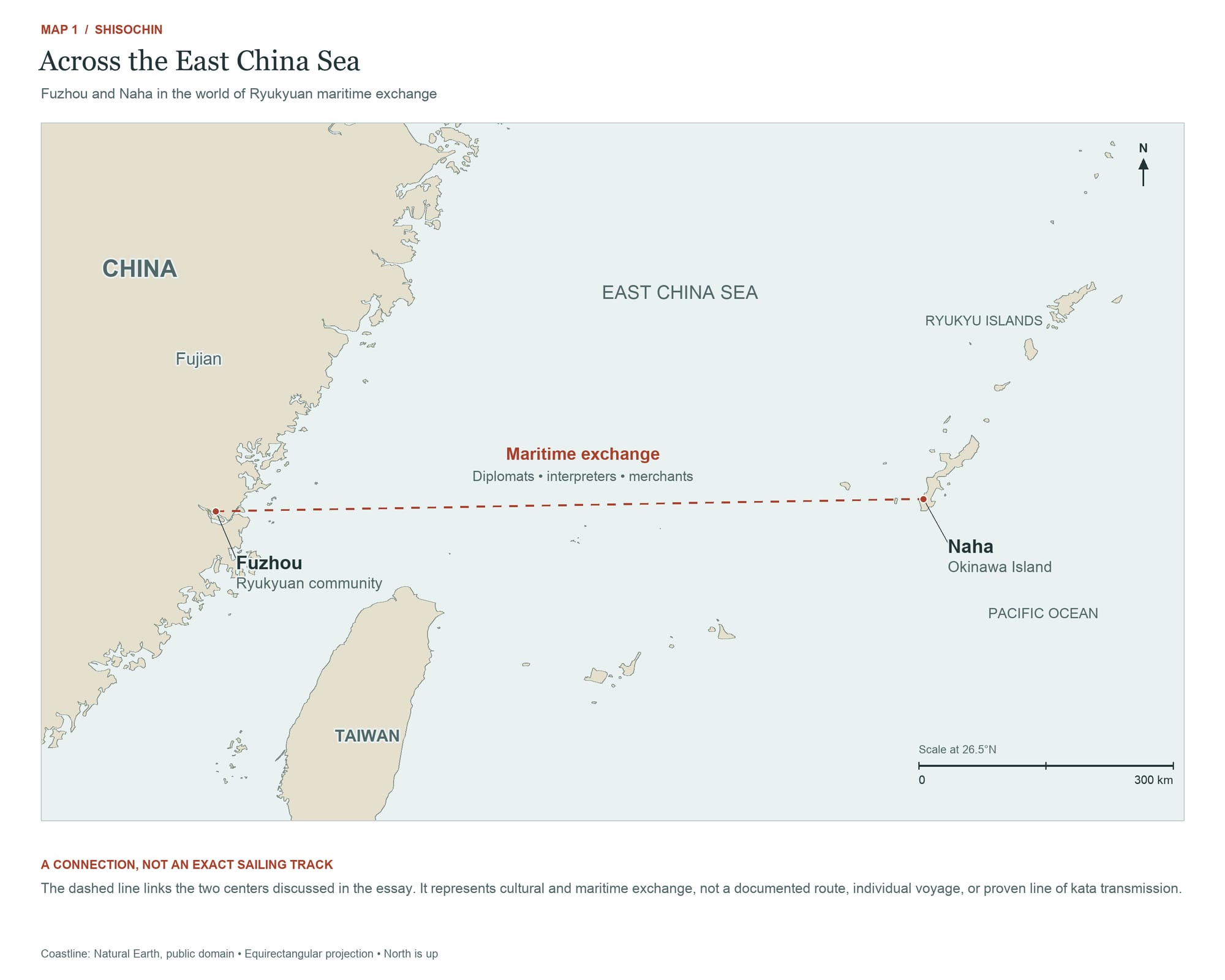
Shisochin Kata is a senior kata with a considerably significant history and broad applications
Most of the classical kata of Goju Ryu have a history that can be told in a single line: they were learned in Fuzhou, China, by Kanryo Higaonna, carried home to Naha, Okinawa, and handed down to Chojun Miyagi.
Shisochin does not fit that line.
It is the one kata in the Naha-te (as opposed to Shuri-te – since we know Kanku Dai most clearly existed before Higaonna) canon for which there is documentary evidence of an Okinawan performance before Higaonna ever set foot in China, and at the same time it is a kata that the most senior of Higaonna’s own students did not preserve. Its history, in other words, has two beginnings and a gap in the middle, and ultimately, it was up to his most favorite student, Chojun Miyagi, to rescue.
A Kata with Two Beginnings
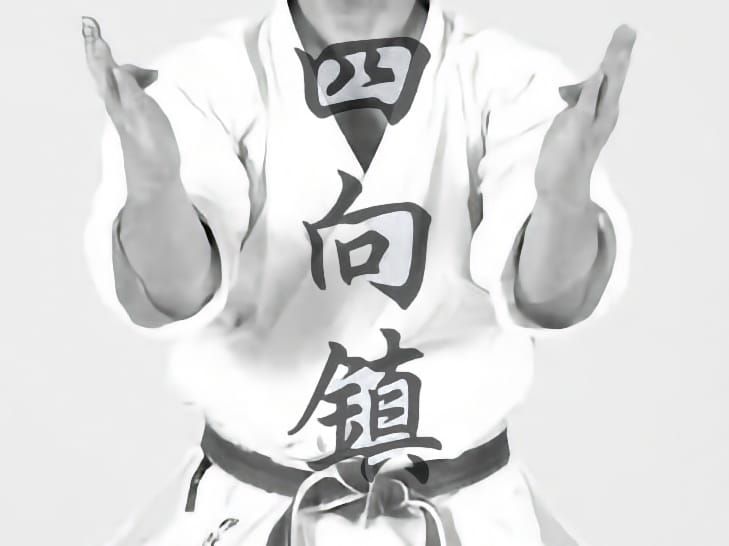
The name itself is a good place to start, because it is one of the few things about the kata on which nearly everyone agrees. Shisochin 四向戦 is read shi (four), kō (to face, or a direction) and chin (battle), and the usual English renderings are “Four Directions Battle,” “To Fight in Four Directions” or, more loosely, “Four Gates.”
The final character is the same one that closes Sanchin 三戦 and Seienchin 制引戦, and it marks the kata as a member of that family of Naha-te forms whose names describe a kind of fight rather than a number of hands or steps. A minority of lineages, mostly within Shito-Ryu, write the last character as 鎮 (to subdue, to pacify), yielding “To Subdue the Four Directions”; the pronunciation is identical and the meaning is, if anything, closer to what the kata actually does.
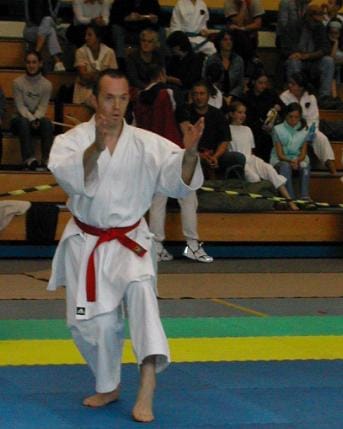
The four directions are not a metaphor. In the middle of the kata the karateka pivots around a single point and delivers the same technique — a low open-hand sweep with a rising palm-heel to the chin — to the rear, the front, the left and the right, and finishes standing exactly where he began. Whoever named this form was describing it.
That the name was preserved at all is a small miracle of transmission. As researchers such as Akio Kinjo, Joe Swift and Mario McKenna have observed, the names of the Naha-te kata were Okinawanized from their original pronunciation in the Fujian dialect, and their meanings were largely lost over successive generations.
Most of the Goju Ryu kata names are numbers whose significance has to be reconstructed; Shisochin is one of the few whose name still describes its content. That alone suggests the form was understood, and not merely memorized, by the men who carried it from China to Okinawa.
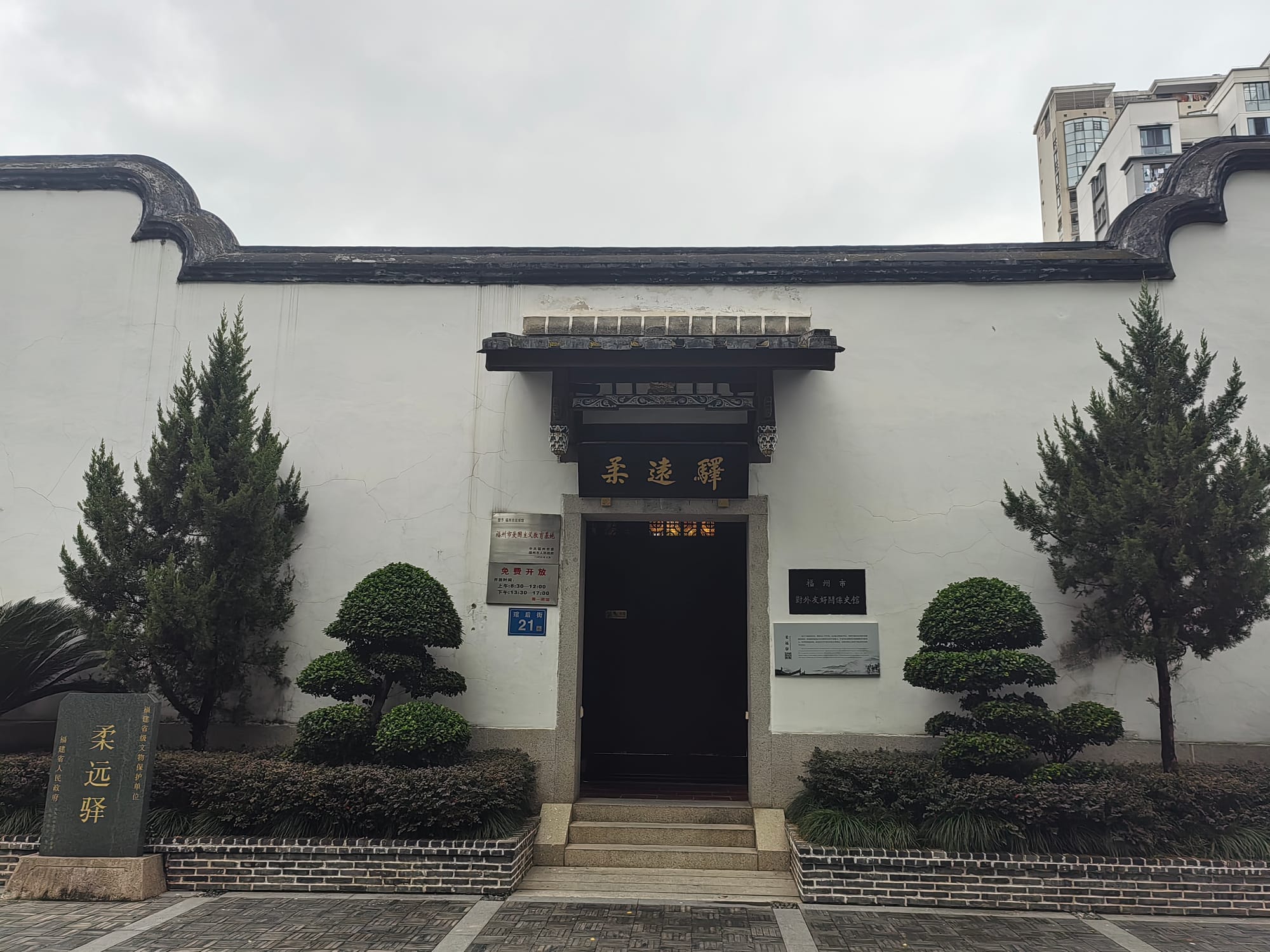
Naha, Fuzhou, and the Last Sappushi
To understand where Shisochin comes from, one has to understand the world that produced it: the port of Naha in the last decades of the Ryukyu Kingdom, and its centuries-old relationship with Fuzhou, the capital of Fujian Province across the East China Sea.
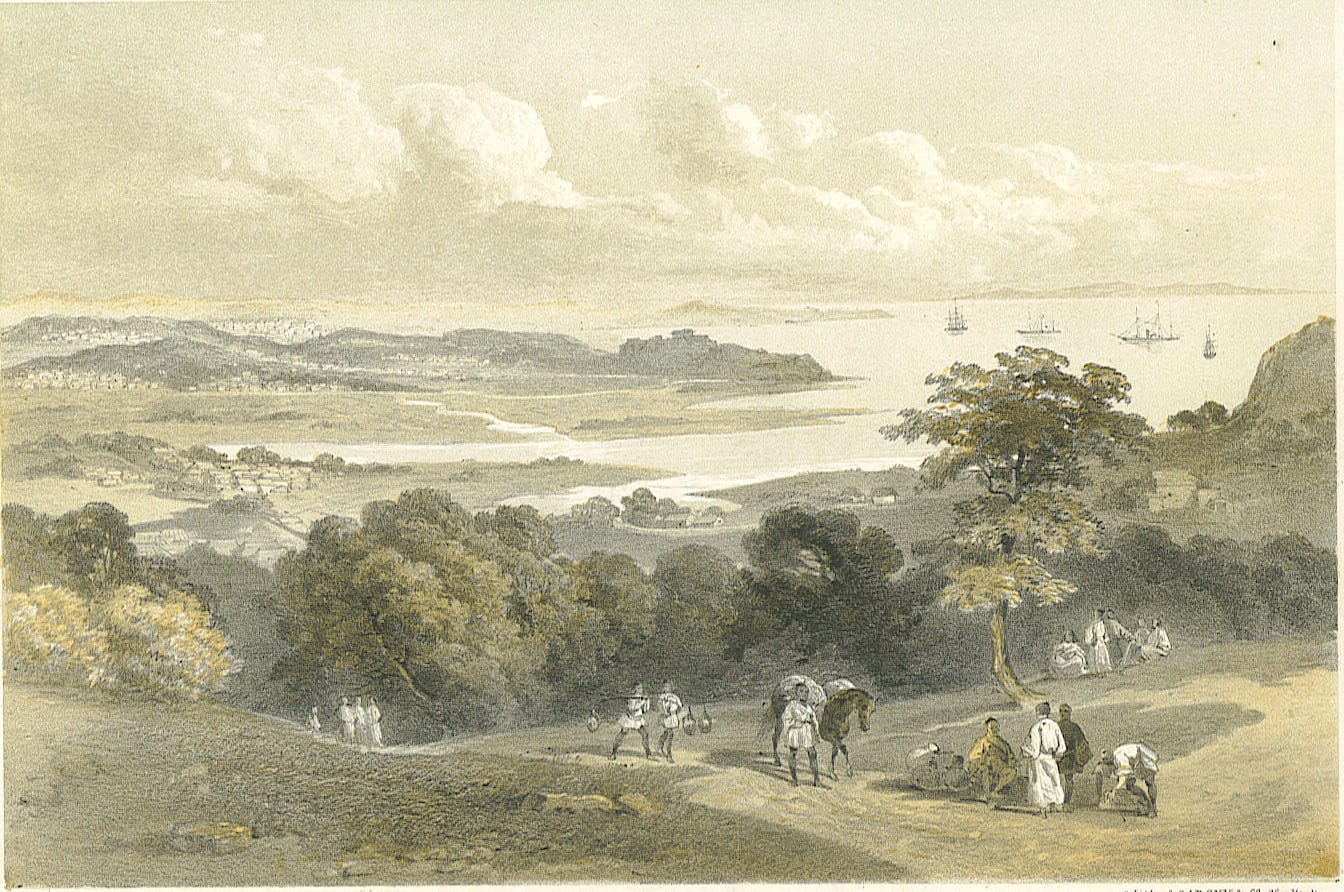
From 1372 until the 1870s the Ryukyu Kingdom was a tributary state of China. Its kings were formally invested by Chinese envoys, the sappushi 冊封使, who sailed from Fuzhou and stayed in Shuri for months at a time; its tribute ships sailed the other way, carrying students, scholars, interpreters and merchants to the Ryukyuan trading compound at Fuzhou. The Chinese community at Kumemura, just outside Naha, supplied the kingdom’s diplomats and interpreters and was, by every account, the channel through which Chinese "boxing" reached Okinawa.
Naha-te, the fighting art of the port, was the product of this traffic — a tradition that looked to Fuzhou the way Shuri-te looked to the royal court.

The last of the sappushi was Zhao Xin, who arrived in 1866 to invest Sho Tai, the final king of Ryukyu, and remained on the island for some five months. In the spring of 1867, before his departure, the court staged a celebration in his honor at the Ochayagoten, the royal villa in the Sakiyama district of Shuri.
The program of that day survives.
It is a remarkable document: a list of ten items, mixing weapons, empty-hand kata and paired drills, performed by a handful of named men of the pechin class.
Among them are tinbei (the shield and short sword) and bojutsu demonstrated by Maesato Chikudun Pechin, the man now identified as Ranpo Maesato; Tesshaku (that is, Seisan) and a kata the program calls “Chishaukin,” both performed by Aragaki Tsuji Pechin; and, at the end, Suparinpei performed by Tomimura Chikudun Pechin.

“Chishaukin” is identified by most researchers as Shisochin. The identification rests on the sound of the name — a Fujianese-dialect rendering of the same three characters — and on the fact that the man who performed it went on to teach a kata of that description.
While certainly there might be some room for doubt, if our inference is correct, then Shisochin is among the very oldest kata in the whole of karate for which a dated, documentary record of performance exists — older, by six years or more, than Kanryo Higaonna’s departure for China.

Seisho Aragaki, “The Cat”
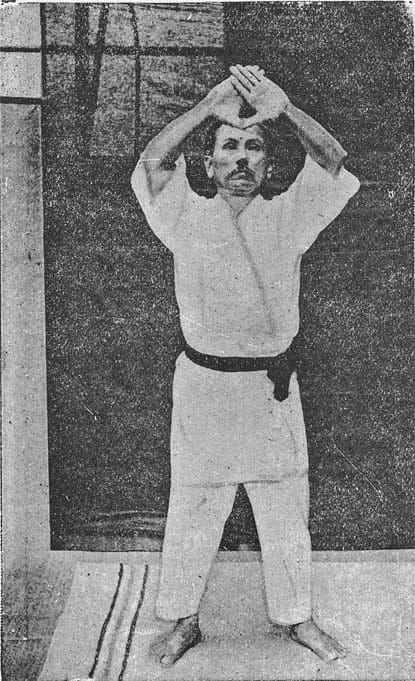
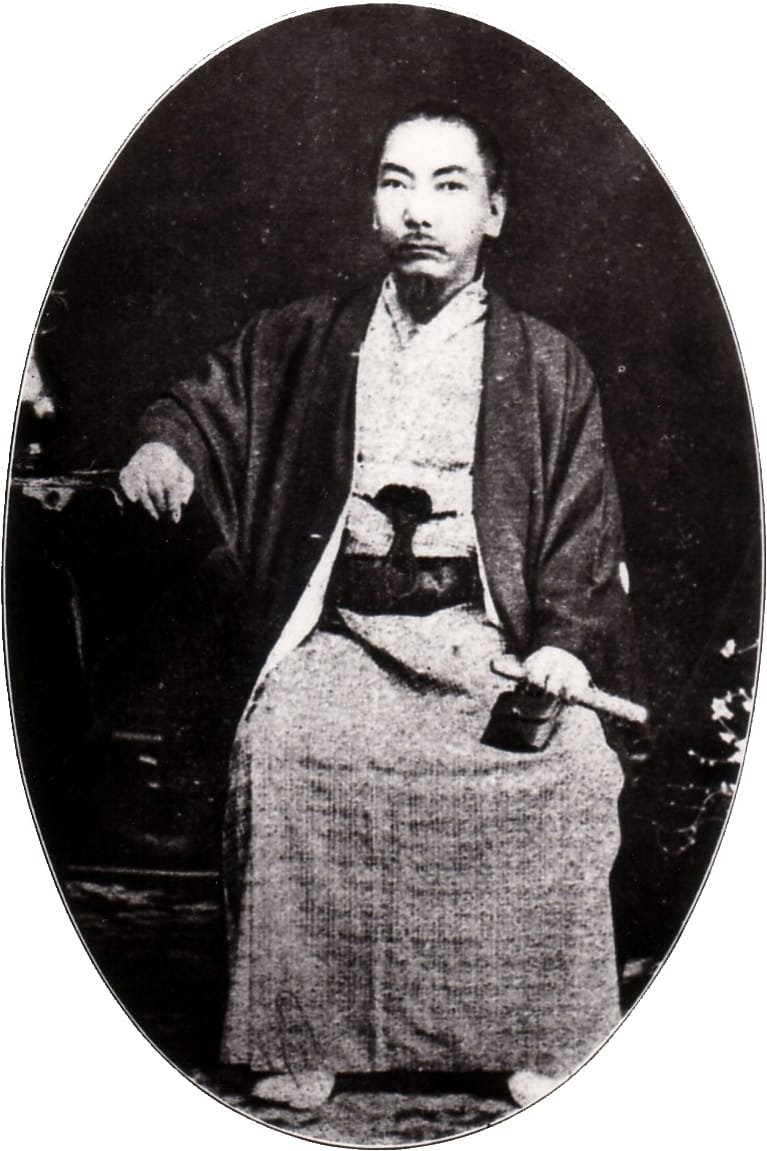
The performer of “Chishaukin” was Seisho Aragaki (1840–1918; some accounts give 1920), known to his contemporaries as Aragaki Tsuji Pechin, and to later generations by the nickname Maya — “The Cat” — for the lightness of his movement.
He was a man of the chikudun pechin rank, roughly analogous to a minor samurai, and a professional interpreter of Chinese in the service of the royal government. That combination is significant. The interpreters of Kumemura and Naha were precisely the men with the linguistic access, the official travel permits and the social standing to study boxing in Fuzhou, and Aragaki was, by the testimony of the 1867 program, the most accomplished empty-hand practitioner in Naha in the years before Higaonna.
His own teacher is recorded as Wai Xinxian of Fuzhou, and his curriculum, so far as it can be reconstructed from what his students later taught, included at least Seisan, Chishaukin, Sochin, Unshu and Niseishi, with some evidence for Sanchin, Sanseru and Suparinpei as well, together with a number of weapons forms that still bear his name.
The list is worth pausing over. It shows that the core of what would become the Naha-te canon — Sanchin, Seisan, Sanseru, Suparinpei — was already circulating in Naha in the 1860s, and that Shisochin was circulating alongside it. Whatever Higaonna later brought back from China, he did not bring it to a blank slate.
Aragaki’s students are a roll-call of modern karate. Kanryo Higaonna began with him in 1867, at the age of about fourteen, the same year as the demonstration for Zhao Xin. Kenwa Mabuni, the founder of Shito-Ryu, counted him among his teachers. So did Gichin Funakoshi, Tsuyoshi Chitose, Kanken Toyama and, by some accounts, Kanbun Uechi.
In 1870 Aragaki was sent to China on official business — he is generally said to have gone to Beijing as an interpreter — and before he left he placed the young Higaonna in the care of his own senior in the art, Taitei Kojo (also read Kogusuku), whose family maintained a training hall in Fuzhou itself.
That arrangement is the hinge of the whole story. It was through Kojo, and through the network of Kumemura families with connections in Fuzhou, that Higaonna obtained the permit and the introductions that took him to China
A caution is in order here, because the similarity of names has caused a century of confusion. Aragaki’s Sochin — the “Aragaki no Sochin” preserved in Shito-Ryu and heavily reworked in Shotokan by Funakoshi’s son — is a different kata from Shisochin, with a different structure and, in all likelihood, a different origin. The two are easily conflated in casual writing, and the reader who encounters a claim that “Aragaki taught Sochin” should not read it as evidence about Shisochin. It is the “Chishaukin” of the 1867 program, not the Sochin of the Shuri and Tomari lineages, that concerns us.
Kanryo Higaonna in Fuzhou
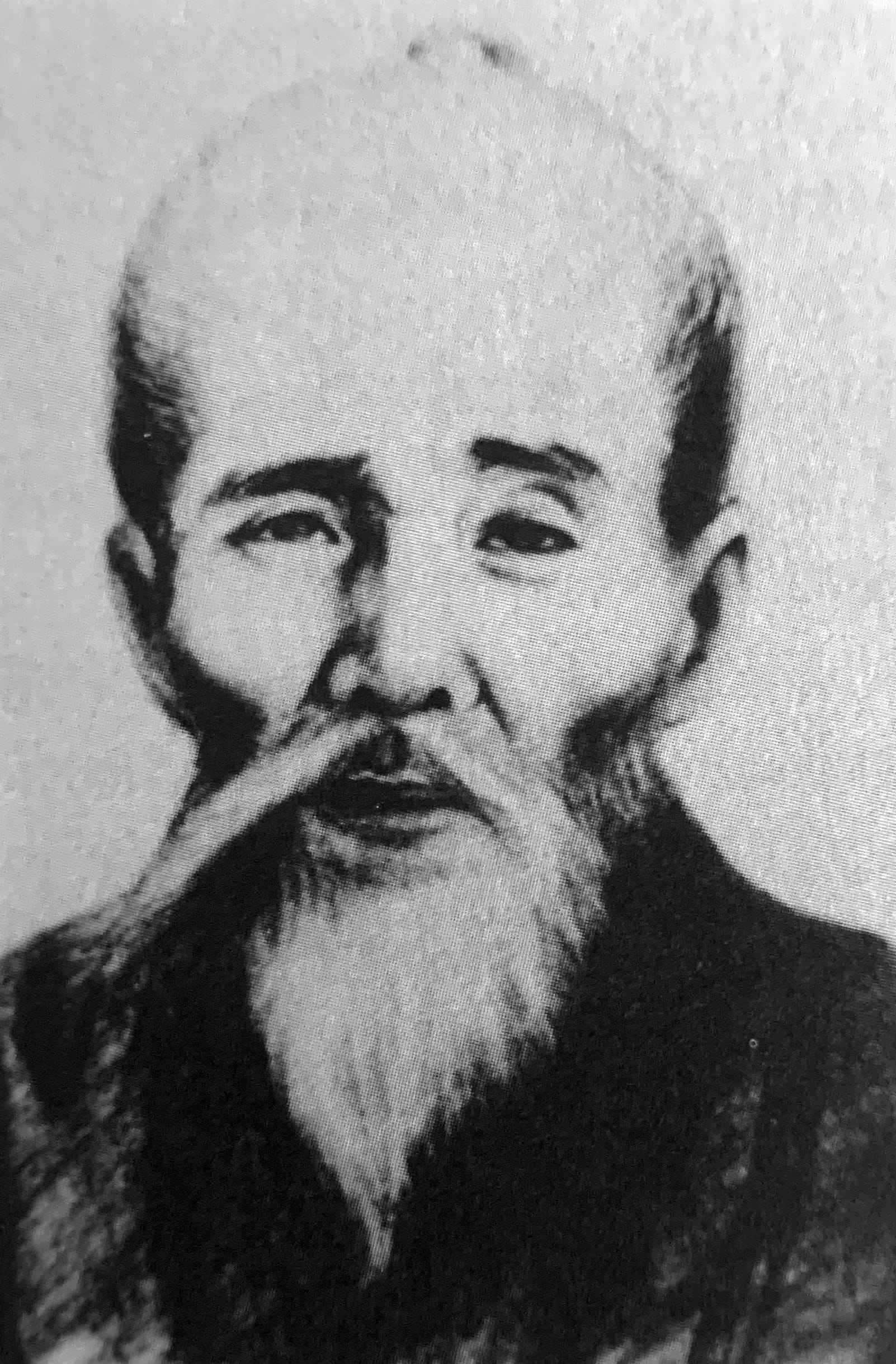
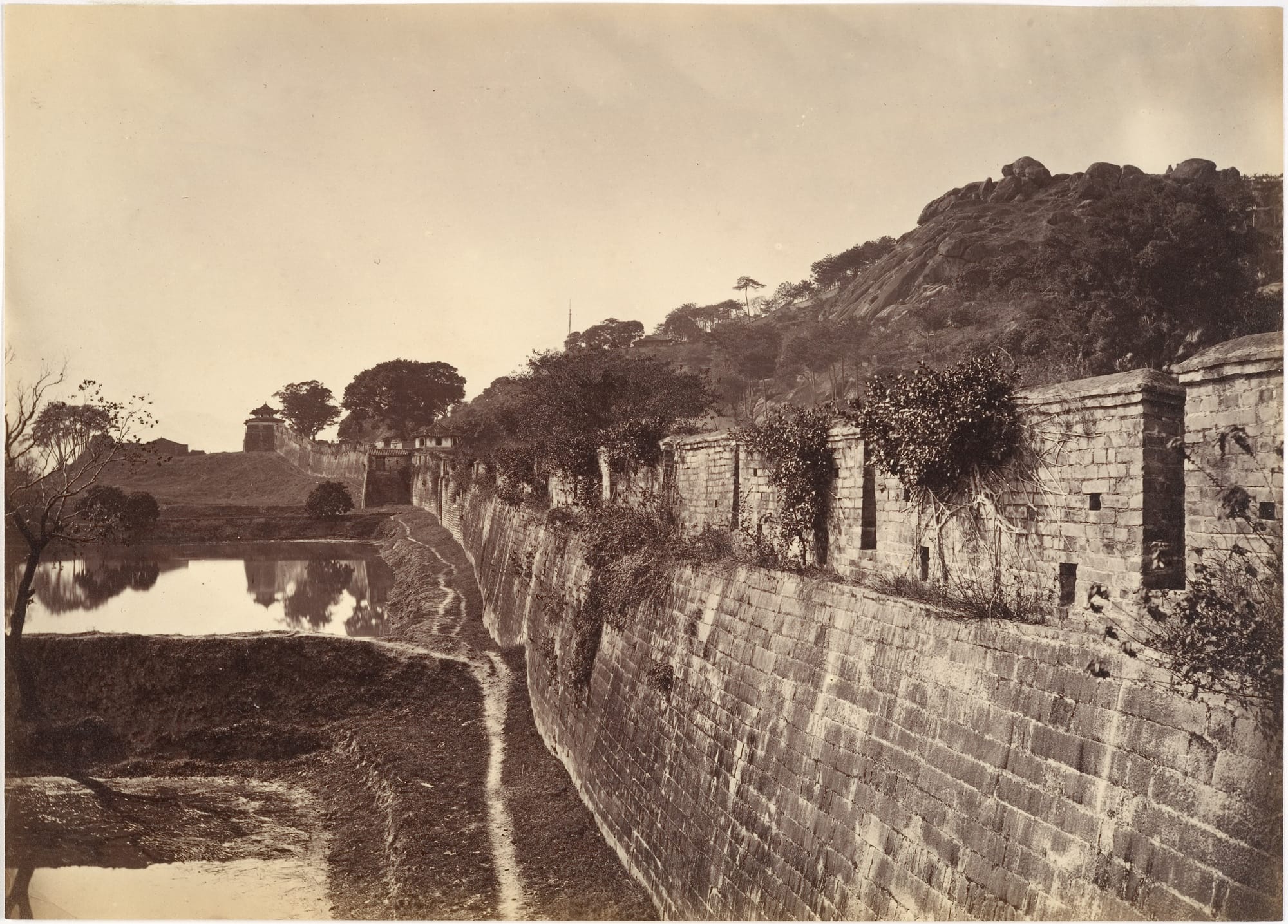
Kanryo Higaonna (1853–1915) was born in the Nishimura district of Naha, the son of a merchant whose small boat traded firewood between the port and the outer islands. The date of his departure for China is disputed; the most commonly cited accounts have him obtaining his permit in 1870, through the good offices of the aristocrat Chomei Yoshimura, and sailing in March 1873, and the period 1873 to 1881 is the one most often given for his years in Fuzhou.
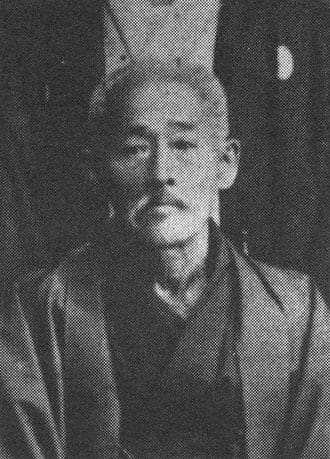
Other traditions stretch the stay to as many as thirteen or fifteen years. What is not disputed is that in Fuzhou he trained under a Chinese master teacher whom the Okinawan tradition remembers as Ryu Ryu Ko, and that he returned to Naha with a system of martial arts, and a set of kata, that reshaped the art of the port.
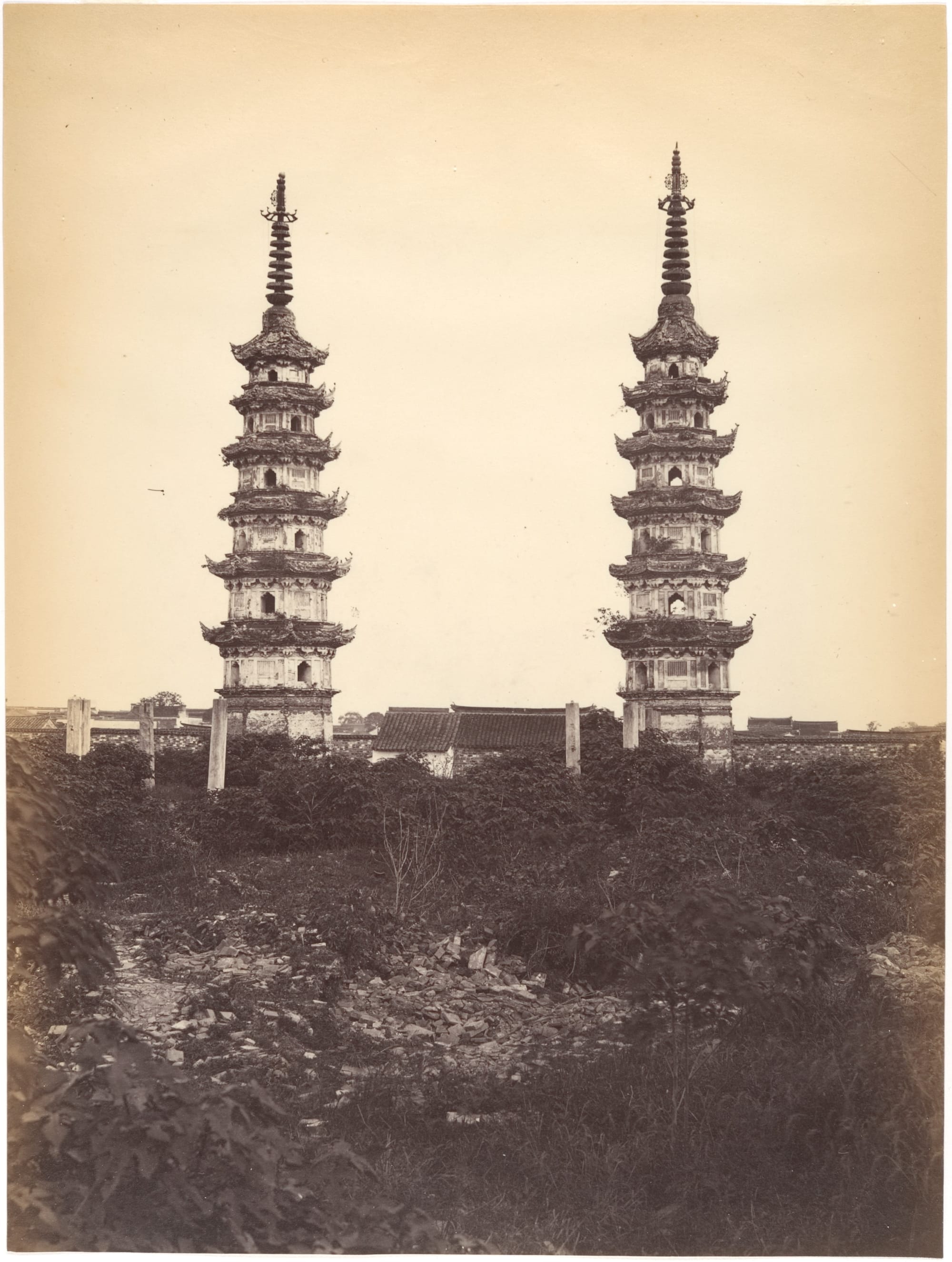
Who Ryu Ryu Ko was remains one of the unsolved problems of karate history. The most influential identification, proposed by the Okinawan researcher Iken Tokashiki in the 1980s, is with Xie Zhongxiang (1852–1930), a native of Changle near Fuzhou and the founder of the Whooping Crane (Minghequan) branch of Fujian White Crane.
That identification has been widely repeated, and it underlies the common statement that the Goju Ryu kata derive from White Crane. But it has serious difficulties.
The Fuzhou Wushu Association has pointed out that Xie was a shoemaker of ordinary birth, not the bricklayer of aristocratic descent that the Okinawan accounts describe; that his nickname in the Fuzhou dialect would not have sounded like “Ryu Ryu Ko”; and — most tellingly — that Chojun Miyagi traveled to Fuzhou in 1915 to visit Ryu Ryu Ko’s grave, which he could hardly have done if Ryu Ryu Ko had another fifteen years to live.
A more recent proposal, by Filip Konjokrad, identifies him instead with Liu Long Gong, a Qing military officer who visited Ryukyu in 1838 and again in 1866. Neither theory is proven, and his identity is likely to remain shrouded in the fog of time.
For Shisochin the identity of Ryu Ryu Ko matters less than one might think, because there is real doubt as to whether Shisochin was among the kata Higaonna brought back from him at all. The evidence comes from an unexpected direction: from the syllabus of the one school that descends from Higaonna without passing through Miyagi.
The To’on-Ryu Problem
Juhatsu Kyoda (1887–1968) entered Higaonna’s dojo in 1902, a few months before Chojun Miyagi did, and remained with him until the master’s death in 1915. He was the senior student, and the style he later founded, To’on-Ryu — “Higaonna’s style,” written with the Tō of Higaonna’s name — was explicitly an attempt to preserve his teacher’s art unchanged.
The To’on-Ryu syllabus preserves Sanchin, Seisan, Sanseru and Pechurin (the To’on-Ryu name for Suparinpei), together with a Seisan variant learned from Kanryo’s kinsman Kan’yu Higaonna, the Shuri kata Jion learned from Kentsu Yabu, and Nepai learned from the Chinese tea merchant Go Kenki.
It does not contain Shisochin, Seienchin, Saifa, Seipai or Kururunfa. Kyoda’s senior students, Shigekazu Kanzaki and Katsumi Murakami, were emphatic on the point: Higaonna, they said, taught only four kata.
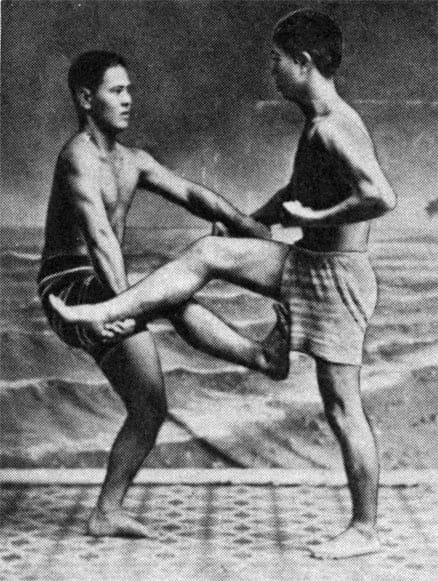
This is the origin of what Fernando Câmara and Mario McKenna, in a statistical study of the structure of the Goju Ryu kata, have called the two-cluster theory: a “Cluster H” of forms attested through both Miyagi and Kyoda (Sanchin, Seisan, Sanseru, Suparinpei), and a “Cluster M” of forms attested only through Miyagi (Saifa, Seienchin, Shisochin, Seipai, Kururunfa, and of course Miyagi’s own Tensho and the two Gekisai).
Where the Cluster M kata came from is the central open question in the history of the style. Three explanations are possible. Higaonna may have taught them to Miyagi and not to Kyoda, which is not implausible given that Miyagi was the more devoted student and the one Higaonna singled out. Kyoda may have learned them and chosen not to preserve them. Or Miyagi may have obtained them elsewhere — from other Okinawan teachers, from Go Kenki, or from his own two journeys to Fuzhou — and folded them into the Naha-te he had received.
Shisochin sits awkwardly in this scheme, and the awkwardness is instructive. Its opening — three steps forward in sanchin dachi with a strike on each step — is the most “Cluster H-like” opening of any Cluster M kata; it looks, at first glance, like a sibling of Seisan and Sanseru. But the resemblance does not survive close inspection. The strikes are open-hand nukite rather than fists, the guard between them is a double open-hand block rather than the kake uke of the older forms, and the hand positioning on the blocks and the pull-backs is subtly but significantly different.
The body of the kata, with its symmetrical repetitions, its predominance of soft hooking and pressing techniques, and its complete absence of shiko dachi, is of a different design altogether. If the two-cluster theory is right, Shisochin is a Cluster M kata wearing a Cluster H opening.
Yet Shisochin is also the one Cluster M kata that can be shown, on documentary grounds, to have existed in Naha before Higaonna went to China — the “Chishaukin” of 1867.
This is the paradox at the heart of its history.
The most likely resolution is that Higaonna learned a form of Shisochin from Aragaki as a boy, encountered related material in Fuzhou, and that the kata as we have it was formalized — and perhaps substantially reshaped — by Chojun Miyagi, who received it from Higaonna in the last years of the master’s life.
That would explain why Kyoda, who was closest to the Sanchin-Seisan-Sanseru-Suparinpei core of Higaonna’s teaching, did not carry it; why its opening harkens back to the older Naha-te; and why its body speaks the same dialect as Seienchin and Kururunfa, the kata that Miyagi also taught.
Some researchers go further and conclude that Shisochin is essentially Miyagi’s own synthesis of techniques from Okinawan forms — drawing on Aragaki’s Unshu (which shares its finger thrusts and rising elbow strikes), on a Tomari-te version of Rohai whose opening matches the start of Shisochin down to the three sanchin dachi, and possibly on southern mantis boxing that Miyagi saw in China — and that the odds of today’s Shisochin being exactly like Aragaki’s original “Chishaukin” are slim at best. The important thing to understand, though, is that the Shisochin of the modern dojo is a form that passed through at least three pairs of hands — Aragaki’s, Higaonna’s and Miyagi’s — and that each may have left its mark in some way.
The Chinese Source
If the Okinawan chain of transmission is uncertain, the Chinese origin is more uncertain still. Three candidates are usually named. The first, and the one most often repeated, is Fujian White Crane, on the strength of the Ryu Ryu Ko identification and of the kata’s open hands. The second is one of the Fujian Tiger systems, on the strength of its pressing forearm and its attacks on the joints. The third is a Fujian mantis or “cricket” boxing, and this last deserves more attention than it usually receives.
The mantis theory was advanced by the Okinawan researcher Akio Kinjo, who spent decades in Fujian and Taiwan comparing the Naha-te kata with living Chinese forms.
According to Kinjo, “Shisochin, or in Fujian dialect Shisauchin, is representative of the movements of a cricket and/or praying mantis,” and the reasoning is specific: “the opening kamaeand nukite in Shisochin are thought to show the mantis hooking its prey and devouring it,” while “the forward stance with the arms extended is indicative of the cricket spreading its wings.”
Anyone who has performed the arm-bar sequence — the front hand hooking under the arm, the rear hand seizing the wrist and pulling to the hip, the forearm pressing down across the elbow — will recognize the image at once. The mantis does not strike its prey; it hooks it, pulls it in and controls it. The theory is credible on technical grounds: there are southern mantis forms that feature finger thrusts delivered while moving in a stance equivalent to sanchin dachi.

None of this is proof. The Fujian systems of the nineteenth century were themselves in flux, borrowing freely from one another, and the “four gates” (si men 四門) is a common organizing idea across the whole family of southern Chinese boxing — one finds four-gate forms in Five Ancestors boxing, in the Hakka arts, and in the crane systems alike. What can be said is that Shisochin’s technical vocabulary — open hands, hooking and pressing, control of the arm at close range, short sharp hip rotation in place of long linear drives — belongs unmistakably to the southern Chinese boxing of the Fuzhou region, and that it is the most “Chinese-looking” of all the Goju Ryu kata precisely because Miyagi’s reforms touched it least in this respect. The hands stayed open.
Chojun Miyagi and the Making of Goju Ryu
Chojun Miyagi (1888–1953) was born in Naha into a wealthy merchant family, began training with Higaonna in 1902 at the age of fourteen, and remained his student until Higaonna’s death in October 1915. He was, by universal agreement, the master’s chosen heir.
In May 1915, in the last months of Higaonna’s life, Miyagi made his first journey to Fuzhou, accompanied by Eisho Nakamoto, with the explicit purpose of finding Ryu Ryu Ko’s grave and his surviving students; he is said to have found the grave and a few of the students, but not the school.
After Higaonna’s death he went again, this time in the company of Go Kenki, the Fuzhou-born tea merchant and White Crane practitioner who had settled in Naha, and on that trip he studied local boxing and observed the Rokkishu, the kata which we know as Tensho.
Between the two world wars Miyagi did three things that fixed Shisochin in its modern form.
First, he systematized the Naha-te he had received into a graded curriculum, dividing the kata into fundamental forms (Sanchin and, from the 1920s, Tensho) and the open-hand kaishugata, and adding, in 1940, the two Gekisai kata for beginners.
Second, in 1929 or 1930 — the occasion was a demonstration at the Meiji Shrine in Tokyo, at which his student Jinan Shinzato was asked the name of his style and had none to give — he named the art Goju Ryu, “the hard-soft school,” after a line in the Bubishi, the Chinese manual that had circulated in manuscript among the Naha masters for generations.
Third, he revised the kata themselves. Seikichi Toguchi and the other senior students record that among Miyagi’s adaptations of the older forms was “the limitation and/or reduction of the wide and original circular movements in the katas Seiyunchin, Shisochin, Sanseru, Kururunfa, Sesan and Suparinpei.”
In Shisochin this is visible in the two double-hand scooping movements — the morote kaisho sukui uke after the opening and the morote chudan kake uke before the double elbow — which in the older Fuzhou-style renderings of the form are large sweeping circles of the arms and which Miyagi drew in close to the body.
It was also Miyagi who gave the kata its public standing. In 1934 he wrote the outline of his art that survives as Karate-do Gaisetsu (“An Outline of Karate-do”), delivered it as a lecture in Osaka early in 1936, and in October of that year took part in the celebrated Meeting of the Masters in Naha at which the name “karate” was formally agreed. The Naha-te of a single port was becoming a national art, and the kata that Miyagi taught were becoming, by that fact, canonical.
Miyagi’s own attachment to Shisochin is one of the best-attested facts in its history. Morio Higaonna, drawing on the recollections of Miyagi’s senior students, records that in his later years Miyagi said that Shisochin “suited his body,” and that it was the kata he favored in his own training.
It is not hard to see why. Miyagi was a heavy, powerful man. In later years, Mas Oyama would be a similar figure in karatedō: both men were strong, powerful, and adept at kumite. The power of Shisochin is in the hips and the forearms, in short movements executed at close range, and in a kind of control over the adversary that is a matter of timing and structure rather than of speed. It is, in the most literal sense, a fighter's kata — which is to say, a kata for someone who has already learned everything the other kata have to teach, and seeks to polish his close fighting skill.
Transmission After Miyagi
Because Kyoda did not preserve it, every version of Shisochin practiced today, in every style that has it, descends through Chojun Miyagi.
From Miyagi it passed to all the principal lines of Okinawan Goju Ryu: to Eiichi Miyazato, whom a committee of Miyagi’s students elected as his successor in 1954 and who founded the Jundokan dojo; to Meitoku Yagi, whom Miyagi’s family later also recognized as a successor and who founded the Meibukan dojo; to Seikichi Toguchi, the founder of the Shorei-kan, who was the first to publish the kata and its bunkai count by count and who made the “four directions” the organizing principle of his teaching of it; and to Seko Higa, the one student who had trained under Higaonna as well as Miyagi.
It passed to mainland Japan through Gogen Yamaguchi, who had studied with Miyagi during the master’s visits to Kyoto in the 1930s and who built the Goju-kai into the largest Goju Ryu organization in the world for its time.
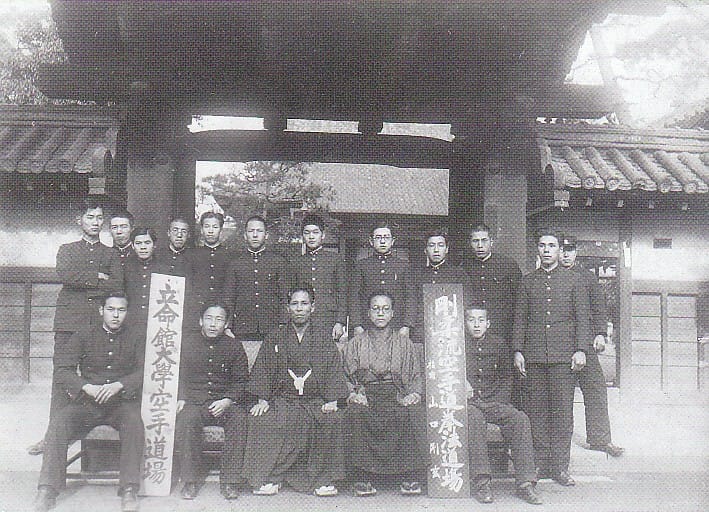
The kata reached Shito-Ryu by a different road. Kenwa Mabuni (1889–1952) was a Shuri man who had trained under Anko Itosu from the age of thirteen, and it was Chojun Miyagi — his friend and near-contemporary — who introduced him to Higaonna around 1909. Mabuni also studied with Aragaki, and with Go Kenki, and when he moved to Osaka in 1929 and named his style for his two principal teachers — the Shi of Itosu and the Tō of Higaonna — he carried into it the whole of the Naha-te canon as he had received it, Shisochin included. Mabuni was the great encyclopedist of Okinawan kata, and it is partly through him that the form reached the many styles that grew from Shito-Ryu in Japan: the Shukokai, the Hayashi-ha and Itosu-kai lines, and the schools of the Tani and Kuniba families among them.
What did not happen is also worth noting too. When Masutatsu "Mas" Oyama assembled the syllabus of Kyokushin in the 1950s, drawing his kata from the Goju Ryu he had learned under So Nei Chu (a senior student and uechi deshi of Chojun Miyagi), he took Sanchin, Tensho, the two Gekisai, Saiha, Seienchin and Seipai, Yansu, Tsuki no kata and Garyu to sit alongside the Pinan/Heian and Taikyoku kata that were near-universal — but not Shisochin, and not Sanseru, Kururunfa or Suparinpei. The omission is surprising, to some extent. However, according to two different uechi deshi of Oyama's, it seems that he viewed Shisochin as a kata of seizing and controlling rather than of striking. Over time, however, almost all Kyokushin-descended dojo that maintain the full set of the classical Naha-te kaishugata have added it to their own syllabus.
And then, in the generation that inherited karatedō, it passed to every traditional dojo and style in almost every corner of the globe as karatedō grew from a martial art born on an island chain to a worldwide movement.
Today, Shisochin is near-universal among blackbelt karateka.
The Versions
A kata that has passed through this many hands, across two countries and four generations, will not be practiced in one way, and Shisochin is not. The differences are real, and they are historically informative, because each records a stage of the transmission.
The Okinawan lines — the Jundokan, the Meibukan, the Shorei-kan and the IOGKF — keep the kata visibly closest to its Chinese roots. The hands are open throughout the opening and the arm-locking sequences; the double-hand scooping movements are performed as circles, close to the body; and the stance in the arm bars is slightly higher, as befits a technique whose force is rotational rather than linear. Between the Okinawan lines the variations are minor: the number of kiai (three in most, occasionally two in some), the height of the low kick, and the exact form of the rising hook before the double elbow.
The Japanese Goju-kai version, descending through Yamaguchi, is more linear in the hands and lower in the stances, in keeping with the general tendency of mainland Japanese karate in the 1930s and after toward longer stances and more emphatic technique. The reality is that it varies more, and travels farther from, the original kata as Miyagi preserved it, and the linear version tends to lose some of the more complex, and important, bunkai that the fuller version presents.
In some ways, the Shito-Ryu version, descending through Mabuni, goes further in the same direction and substitutes closed fists at several points where the original Okinawan kata keeps the hand open, though it, too, opens with nukite and preserves the four palm-heel strikes and much of the rest of the kata. In general, it preserves the original form, bunkai, and history of the kata more than the Goju-kai version does.
A Kata from the Crossroads
It is tempting to want a cleaner story than this — a single Chinese master, a single Okinawan student, a single unbroken line. Shisochin does not offer one, and the refusal is itself the lesson.
The kata is a document of a hybrid culture that spans Okinawa and China, and today now spans the globe, thanks to Chojun Miyagi and the Goju Ryu students and teachers who carried it, in slightly different forms, to every corner of the world.
The four directions of the name have always invited a larger reading — the four cardinal points, the four elements with the karateka standing at their center as earth, the four guardian kings who stand at the gates of a temple.
The history of the kata suggests a humbler one. Shisochin faces four ways because the men who made it did as well: toward China and toward Okinawa, toward the past they had received and toward the students to whom they would give it and the future they would create.
Indeed, to perform the kata well is to stand at that crossing, and to hold all four directions at one time.