Dating back some 1200 years, wooden boards of names have been used to mark history, lineage, and rank in Japan. Today, serious martial arts dojo eventually provision their own as they grow larger in order to preserve their history and point the path to the future.
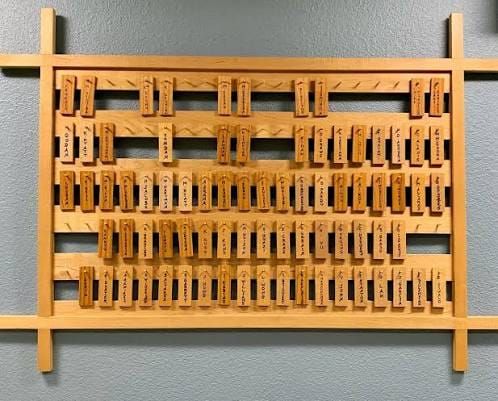
Walk into many traditional dojo in Japan, and into many around the world, find the main dojo floor, and you will have found the board. It hangs on a side wall, usually near the entrance to the floor, around eye level, and it is covered in small wooden plates, each bearing a name and perhaps some dates. The plates are arranged in rows. Nobody is standing beside it to explain what it is.
Nobody needs to. It is history, made solid and touchable.
The board is a nafudakake 名札掛け, and it is one of the oldest and least discussed fixtures of the martial arts.
Landmarks on the Dojo Floor
Most of what has been written about the dojo concerns the shinzen 神前, the central representation of the dojo, with its kamidana 神棚, the representation of the home of the strong spirit of the dojo, its shodo 書道, calling to mind the concepts important to that dojo, and usually, its portraits of the founders.
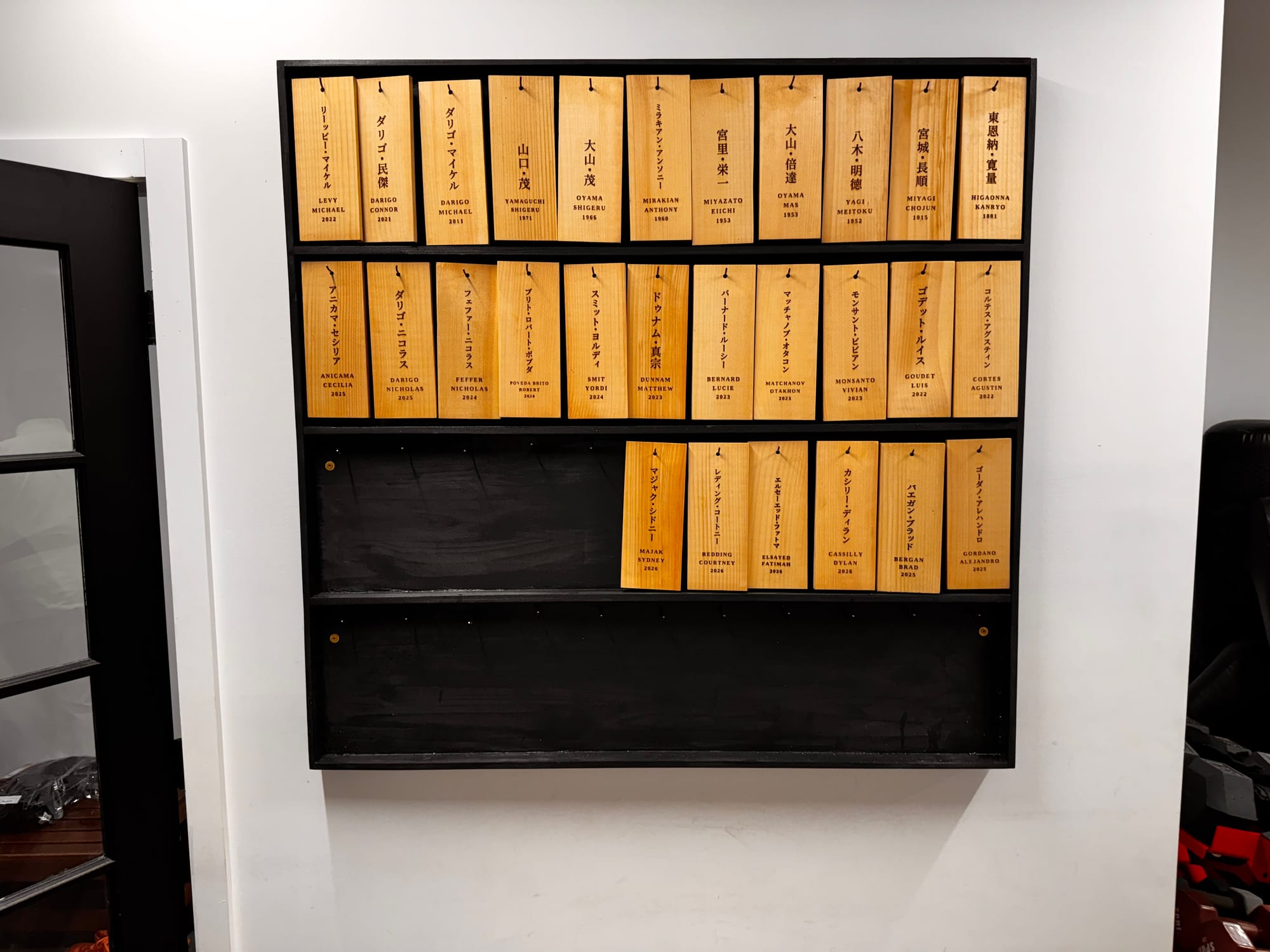
The nafudakake 名札掛け belongs to the other end of the room. One encounters it upon entry to the dojo floor. It is the way the history of the dojo is recounted and celebrated, and especially displayed through the naming of all the men and women who have made the dojo what it is.
The nafudakake 名札掛け is the recounting of how the dojo came to be, why it exists, and as all good history does, it tells us who the dojo is today and points the way to the future.
The Word and the Board
The term is a compound of three ordinary words. Na 名 is “name.” Fuda 札 is a tag, label or small plaque — a slip of wood, paper or metal on which something is written. Kake 掛け comes from the verb kakeru, “to hang,” and names the thing that hangs the tags. A nafudakake 名札掛け is therefore, with complete literalness, a “name-tag hanger.” The individual plates are nafuda 名札. In English the whole assembly is usually rendered as the “rank board” or “name board,” both of which are accurate and neither of which is quite complete.
The middle character places the dojo board inside a much larger Japanese tradition. Fuda is the same word that appears in ofuda 御札, the talismans sold at shrines; in senjafuda 千社札, the slips pilgrims paste to temple gates; in kifuda 木札, the wooden tags sold at festivals with one’s name carved into them; and in the plastic nafuda an office worker clips to a jacket.
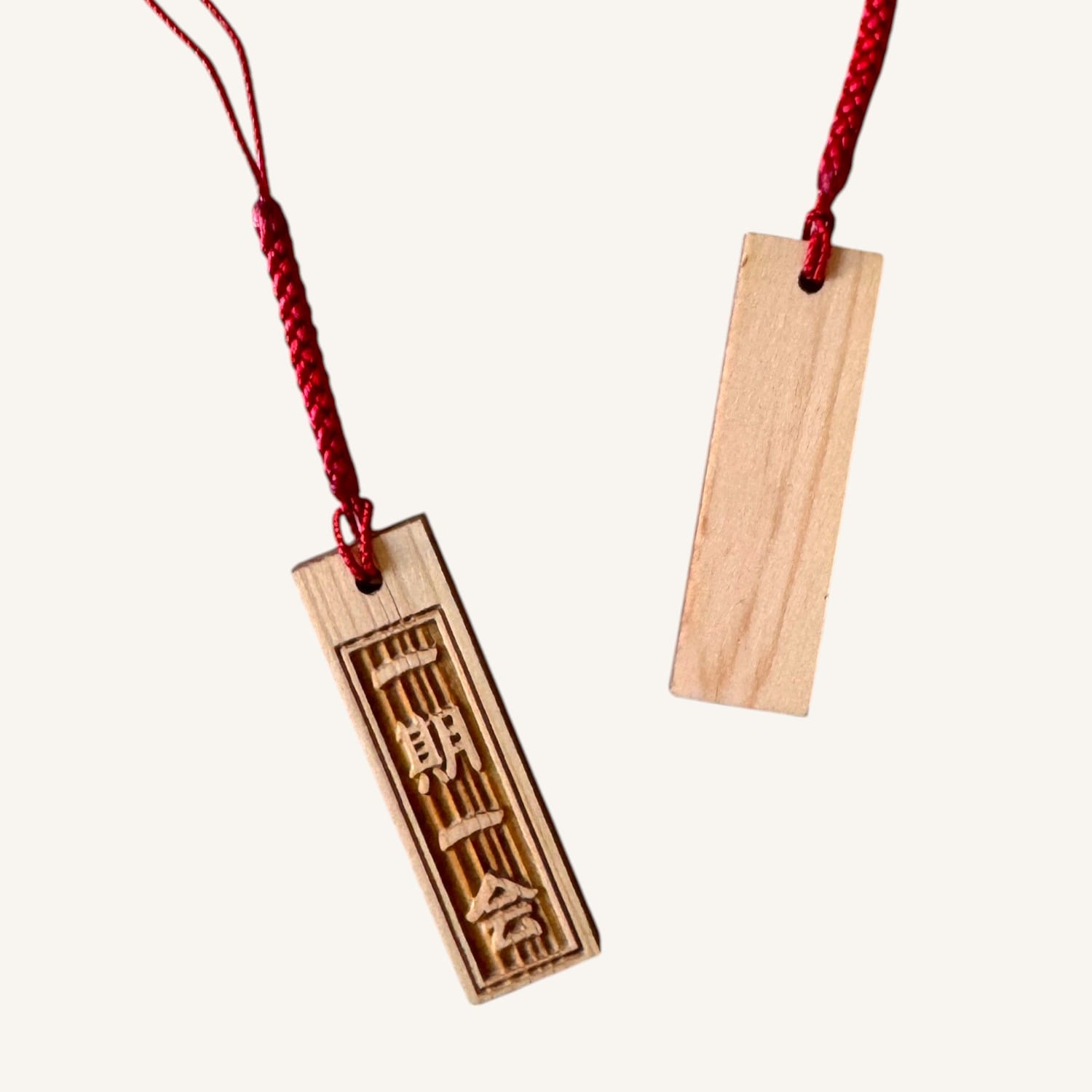
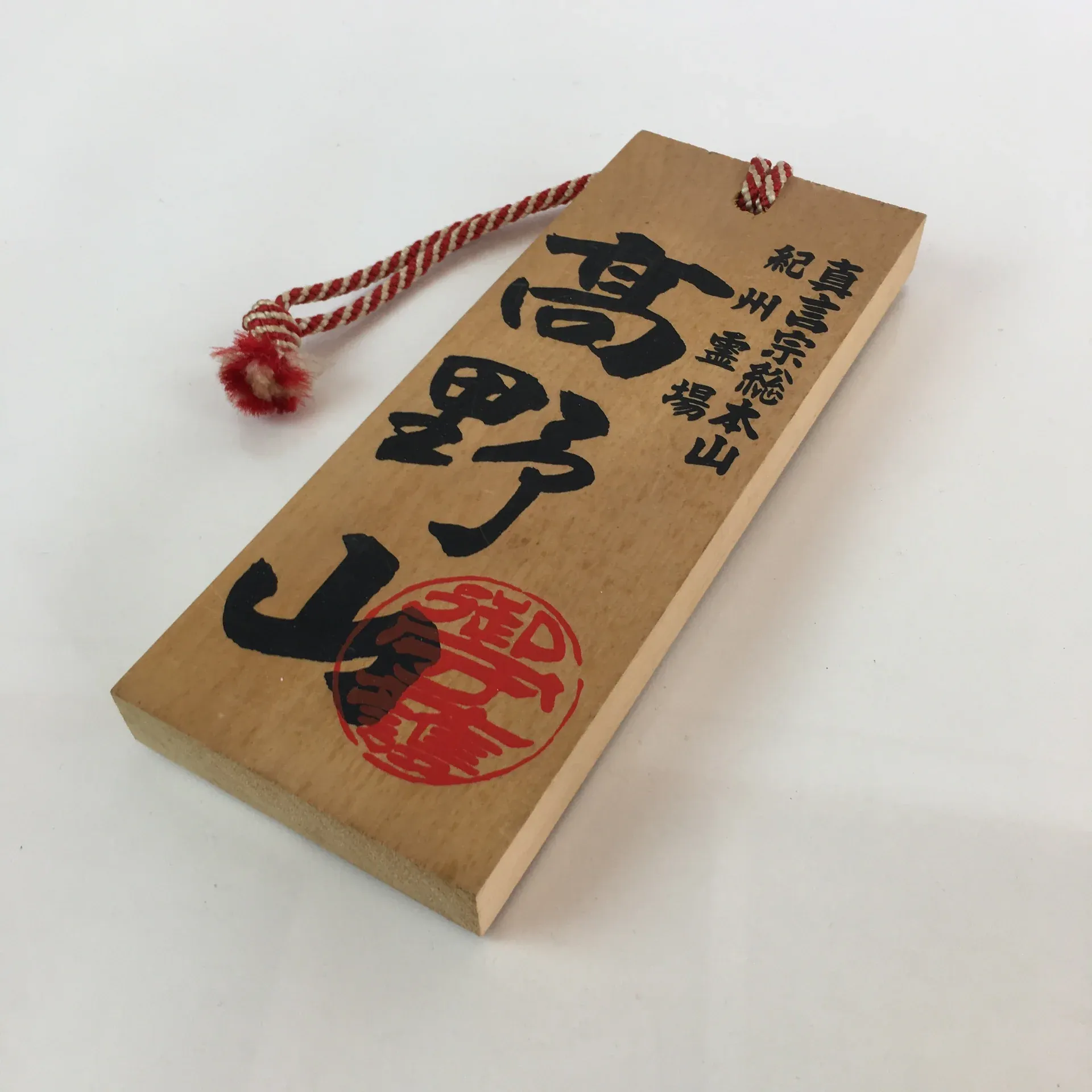
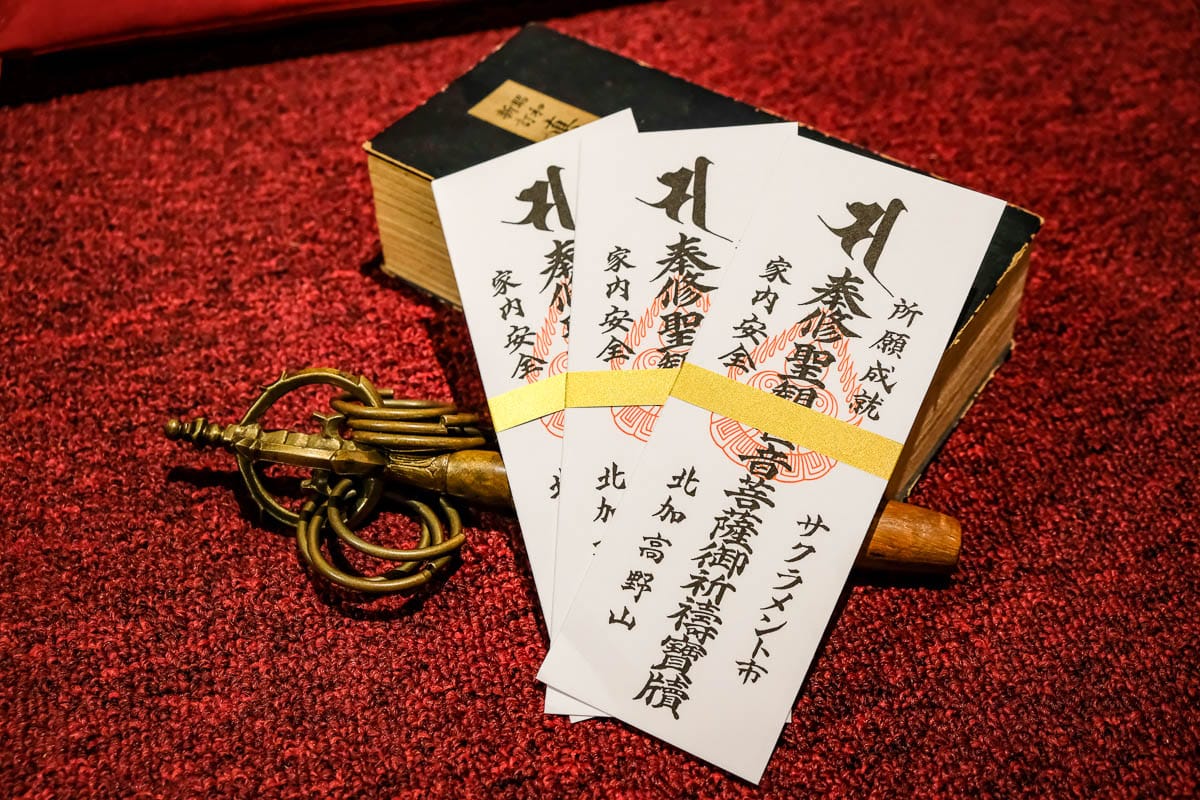
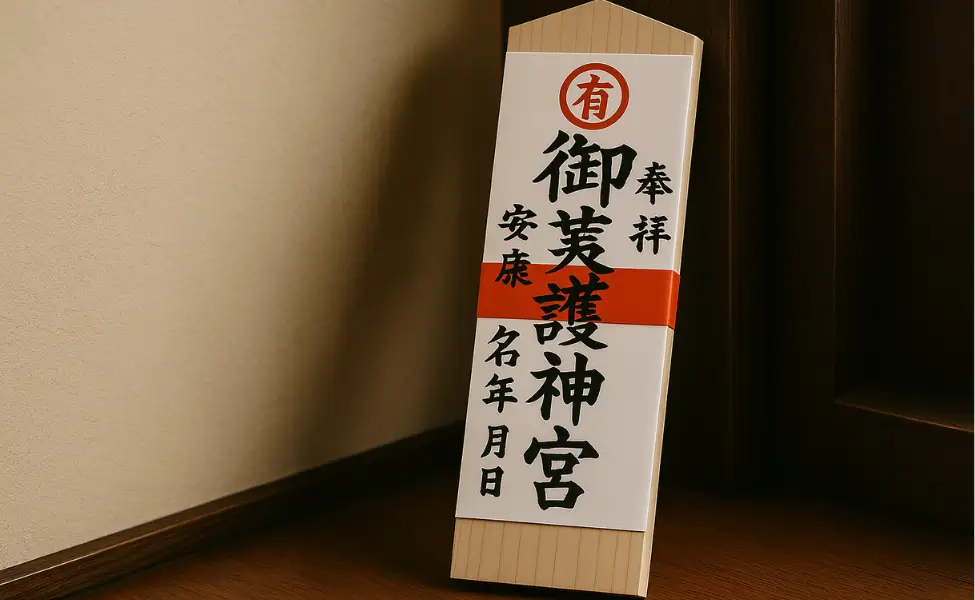
Various Nafuda, Kifuda, and Ofuda
In every case the fuda is a small object carrying a short piece of writing, meant to be displayed where others will see it. A nafuda is not a record for the drawer; it is a record for the wall, and a record to display and be displayed.
Karateka are quite familiar with the concept of an ofuda. Every year, at Kagami Biraki, a special kind of shikishi (a board that displays shodo, calligraphy that is made to represent the concept it communicates) board is made to hold the meditation concept for the year. That board is a special kind of ofuda.
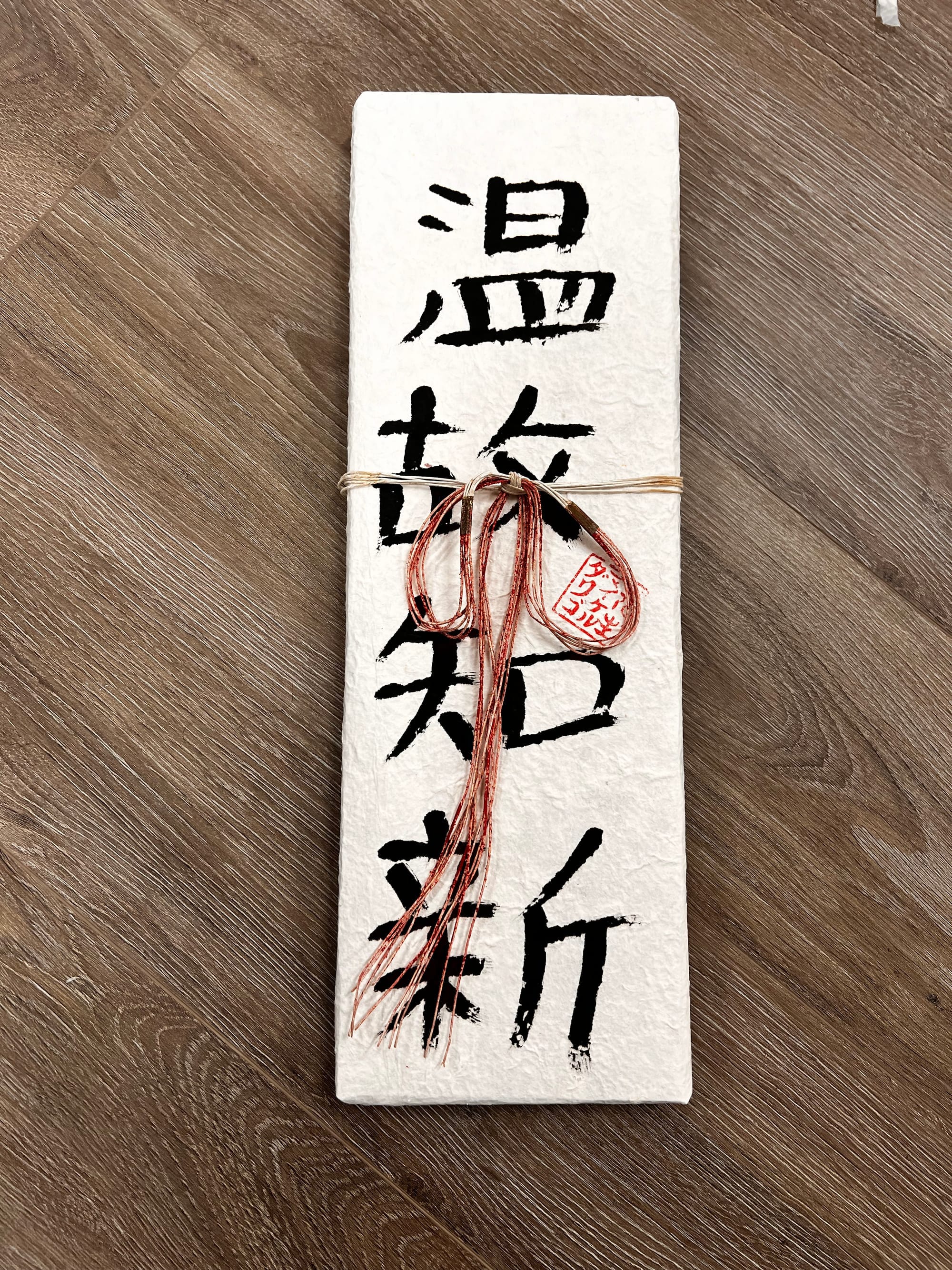
For a fascinating pictorial essay on the specific ofuda used at Kagami Biraki, and how they're made, visit this article:
 Goju Karate
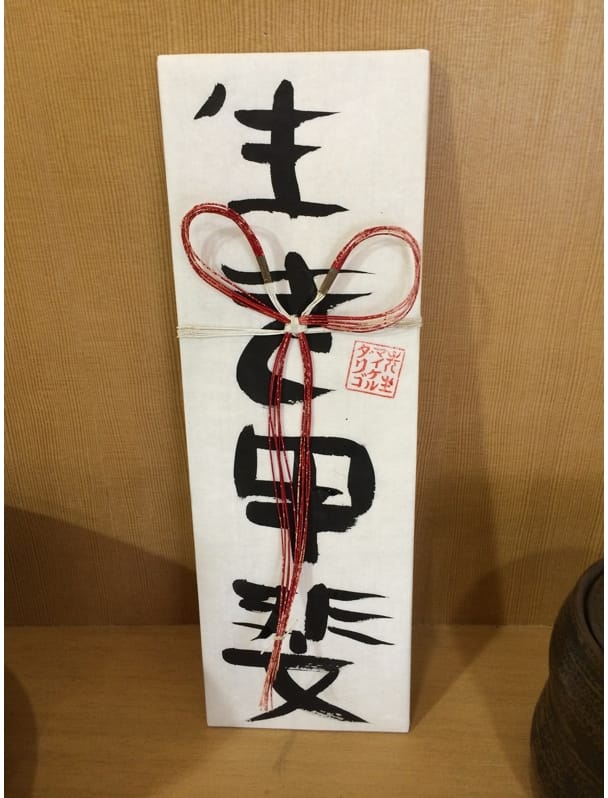
The Making of a Special Ofuda
Names on Wood: The Deep Background
Long before there were dojo, there were wooden tags. Archaeologists working at the sites of the Nara-period capitals in Japan (approximately eighth century AD) have recovered tens of thousands ofmokkan 木簡, thin slips of wood, usually of hinoki cypress, on which the officials of the eighth-century court kept their records.

Many are tax labels tied to bales of rice; others are rosters of guards, laborers and monks. Wood was cheap, could be shaved clean and reused, and survived in waterlogged ground when paper did not. The practice of writing a person’s name on a slip of wood so that it could be attached, displayed and moved is, in Japan, more than twelve hundred years old.
The habit never left; temples hung the names of donors on wooden tablets, and the shogunate posted its laws on kōsatsu 高札, raised boards at crossroads. But two Edo-period institutions are the clearest ancestors of the ranked board of names the dojo would later adopt.
The first is the banzuke 番付 of sumo. From the mid-eighteenth century the Edo sumo organization published, before each tournament, a ranking of every wrestler in the system. The banzuke is read from the top down and from the center out: the yokozuna and ōzeki at the top in large characters, the lower ranks beneath in progressively smaller script, east on the right and west on the left. It is still brushed by hand today, and anyone who has watched a student’s plate placed on a nafudakake after a grading will recognize the idea at once.
The second is the dan system of the game of go. The hereditary go houses of the Edo period ranked professional players on a ladder of nine dan 段, the character meaning a “step.” The ladder was public, competitive and, crucially, numerical: a fourth-dan player was not merely senior to a second-dan player but exactly two steps above him. This is the system that Jigorō Kanō would borrow for judo, and from judo it would spread to kendo, karate and nearly every other Japanese martial art.
For more on ranking and how ranks work in martial arts, see this article:
 Goju Karate
From the Register to the Board
The martial schools of the Edo period — the koryū 古流, the “old streams” or "old schools" — did not, as a rule, grade their students on a ladder. They issued licenses: a mokuroku 目録, a catalogue of the techniques a student had been shown; a menkyo 免許, a license to teach; and for the very few, menkyo kaiden 免許皆伝, the license of full transmission. These were scrolls, kept in a box at the student’s home, not on the dojo wall.
What the Edo dojo kept on the premises was the register. The monjin-chō 門人帳, the “book of those who have entered the gate,” recorded every student formally admitted, with the date of entry and the name of the person who had introduced him. The great town dojo of the late shogunate — the Genbukan of Chiba Shūsaku, the Renpeikan of Saitō Yakurō, the Shigakukan of Momonoi Shunzō — enrolled students by the thousand, and their registers are among the principal sources for the history of Edo swordsmanship. The register was the dojo’s memory. It was not a thing students looked at every time they entered the room.
The transition from the book to the board happened in the decades after the Meiji Restoration, and it happened for a reason. In 1882 Jigorō Kanō opened the Kōdōkan, and within a year or two he had done something no previous Japanese martial arts teacher had done: he had divided his students into kyū 級 and dan grades on the model of go, and given the dan holders a visible sign of rank, the black belt, to wear in the room. The Dai Nippon Butokukai, founded in Kyoto in 1895, adopted graded systems for kendo and judo, and by the early twentieth century every dojo in the country had students standing on a numbered ladder. The obvious way to show that ladder — the way the sumo world had shown its own for a century and a half — was a board of names on the wall.
It is in the kendo and judo dojo of the Meiji, Taishō and early Shōwa periods that the nafudakake 名札掛け appears in the form we recognize today, and it is from those dojo that karate inherited it.
Karatedō, which had always held on to the older ranking and certification system of the koryū 古流 ("old schools") and resisted the more modern dan and kyu ranking, came late to the dan system: Gichin Funakoshi awarded the first karate dan grades in Tokyo in April 1924, on the Kōdōkan model, and by 1937, all karatedō dojo were following the dan and kyu ranking system. Even Chōjun Miyagi, well-known for being dismissive of ranking, had a nafudakake 名札掛け in his Goju Ryu dojo by that point.
How the Board Is Read
A nafudakake 名札掛け is a hierarchy rendered in wood, and like every hierarchy it is organized in space. Three conventions govern it.
The first concerns where the board hangs. The dojo is divided, by a convention older than the martial arts, into an upper seat and a lower seat. The kamiza 上座 is the front wall, the shinzen 神前, where the kamidana 神棚 and the portraits hang and where the teacher sits or stands. The shimoza 下座 is the back of the room, where the students line up and where the door usually is. The side walls are likewise ranked: the jōseki 上席 is the senior side, to the right of a person facing the front, and the shimoseki 下席 the junior side, to the left. The nafudakake belongs to the lower and junior part of the room, which is to say it belongs to the students. In most traditional dojo it hangs on the shimoseki wall or near the entrance, and never on the shinzen 神前 itself. The front of the room is for the present and those training; the board is for everyone who has made the dojo, and a reminder to all those who train.
The second concerns the direction in which the board is read. Japanese is traditionally written in vertical columns running from right to left, and the board follows the same logic. Each nafuda carries its name written vertically, family name above given name. The most senior plate hangs at the top right. Rank descends as one reads across to the left (or down, and to the left).
In some nafudakake 名札掛け, the board is read from the top right corner across the row, and then to the next row, starting again from the far right. In other nafudakake 名札掛け, the board again is read starting from the top right corner, but is read down the rightmost column, and then again to the top of the next column, and down once again, across the entire board. Regardless, the most junior position is the point furthest, in every sense, from the top right.
The third convention concerns what, exactly, is being presented. There are two main presentations.
First, and most likely in a larger dojo, the history of the dojo is being presented. The nafuda starts from the originator of the school of training (the "ryu" branch or style) and continues through the actual founder of the dojo, and further continues through the dan-ranked students, ordered by the date of their first dan ranking.
In a smaller dojo, there is an alternate organization of the nafuda: all the students are presented on the board itself, again starting from the originator of the school of training, then proceeding through those coming after, to the founder of the dojo, and then moving to all the students.
Some boards of this style also reflect the rank of students (once the originator of the style, his successors, and the founder of the dojo are presented) and order the board by grade first and seniority within the grade second. All the yūdansha 有段者, the black belts, come before all the mudansha 無段者. A fifth dan hangs above a fourth, two fourth-dan are ordered by the date of promotion, and the kyū grades follow the same rule in descending order. The rank itself may or may not be written on the plate; in many dojo it is not, on the reasoning that the board already shows it by position, and that a name is a more dignified thing to display than a number.
Reading the board, then, takes a few seconds. The person whose plate sits at the top right is the first among equals. The plates in the first column or two are the senpai 先輩 whose instructions carry weight on the floor. One’s own plate is somewhere in the middle, and everyone below it is a kōhai 後輩 for whom one is responsible.
The Nafuda Plate Itself
The nafuda is a small object, and is made with care. The traditional woods are some kind of pine, calling to mind the hinoki 檜, the Japanese cypress, pale and faintly fragrant, which takes characters and does not warp; kiri 桐, paulownia, lighter and softer, the wood of chests and boxes; or some similar wood. Sometimes the wood darkens, the wood of temple pillars and of long-established dojo. A standard plate is a few centimeters wide and around a hand’s length long, planed smooth, with a hole or notched tab at the top by which it hangs.
The board is a framed rectangle of wood fitted with either a grid of small pegs, which lets a plate be lifted and rehung in a moment, or horizontal grooved rails into which the plates slide, which keeps the columns straight. A good board is built with room to grow, because a dojo doing its work will outgrow its first board, and a crowded board is a happier sight than an empty one. The reverse of the plate is sometimes used: in some dojo it carries the dates of entry and of each promotion; in others it is simply blank.
Arrivals, Absences, and the Turned Plate
A nafuda enters the board at a definite moment, and it is most certainly not the first class, even in a small dojo where all the students are listed on the board. The first weeks in most traditional dojo are provisional; admission comes later, with nyūmon 入門, “entering the gate.” In the Edo dojo this was the moment the name went into the monjin-chō.
In the modern dojo it is the moment a plate is written, and the hanging of that plate at the bottom left, in the lowest place there is, is a small ceremony many students remember for the rest of their lives. The plate says: you are now one of us, and you are the least of us, and both of those are good news. In a thriving dojo, the nafuda that represents the least among the names listed will not be in that position for very long.
There is an eternal nature to the nafudakake 名札掛け. Some of the names are likely to be those of karateka no longer walking this mortal plane. But yet, their names remain, inspiring and leading despite their lack of physical presence.
In some smaller dojo that use the nafudakake 名札掛け as a kind of member listing, the board is sometimes used to keep attendance, designate rank, and even in some cases, record the absence or expulsion of a student. Absences can be indicated by turned plates, with the name-side turned-in; and on the backs of some plates a small paper label can record dojo fees being paid, class attendance, and more. All of this is a matter of dojo kun, the rules and customs of the dojo itself.
What the Board Teaches
There is a range of ideas, concepts, and aspirations that the nafudakake 名札掛け teaches.
First and foremost is this: the dojo exists because of the hard work of the men and women who caused it to exist. No dojo arises out of nothing, magically appearing. It takes years of hard work by so many karateka: those that originated the style of karatedō; those that taught the karatedō that trained the successors of the originator, eventually leading to the founder of the dojo itself; and those karateka that became the backbone of the dojo itself, teaching classes, helping to run the dojo, doing all the invisible jobs that make the dojo the strong and vibrant kizuna (community) that it becomes.
It is human nature to forget that the things we value do not exist organically: someone caused them to exist, and those "someones" continue to work hard to make sure what we value is there for us. The names of the men and women on the nafudakake 名札掛け are the names of those "someones."
The nafudakake 名札掛け honors those men and women, and rightfully so.
Second, history is important because it tells us who we are: it defines our identity. The men and women on a nafudakake 名札掛け are that history, and they are the identity of the dojo.
And lastly: the board moves slowly. A new plate might not appear on the board for a number of years. This is what the dojo teaches by ren ma 錬磨, the constant polishing — the grinding of a blade or the burnishing of a mirror, a little at a time, for a long time. The nafudakake 名札掛け is ren ma made visible. Every plate on it is where it is because of hard work that is consistent.
In the final analysis, the nafudakake 名札掛け is the strong spirit of the dojo, made visible, and carved in wood. The dojo aspires to exist forever, and the nafudakake 名札掛け is a large reminder of this mission.
Like the dojo, the nafudakake 名札掛け is forever.